
A Cure for Wellness
New Review at FilmFisher

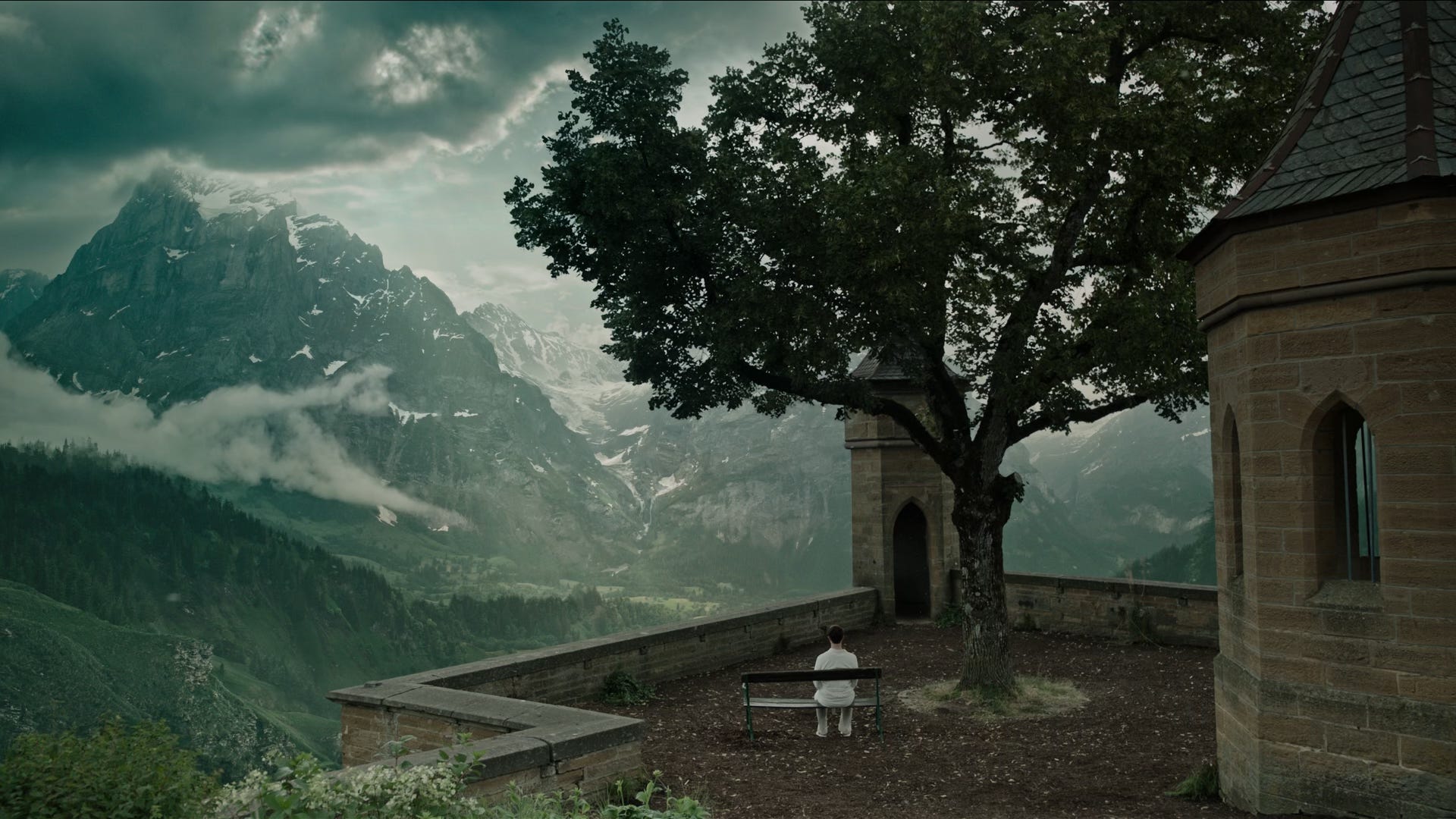
“A man lives not only his personal life, as an individual, but also, consciously or unconsciously, the life of his epoch and his contemporaries.” Thus writes Thomas Mann in his great novel The Magic Mountain (or Der Zauberberg), about a young man’s extended stay at an alpine sanatorium in the years before the first World War. The Magic Mountain is intimate in scope, with the action confined almost entirely to the hospital’s grounds, but it is epic in its length and its introspective and intellectual breadth. Through its youthful hero, Hans Castorp – caught in the tug-of-war between the ideologies of his time, ultimately swept along by the tide of history into the world-shaking events of the early twentieth century – Mann imagines “the life of his epoch.”
After making five wacky blockbuster westerns with Johnny Depp over the course of ten years (from 2003 to 2013), Gore Verbinski turned to psychological horror with 2017’s A Cure for Wellness, a Magic Mountain for the twenty-first century that is not really much less epic than his massively scaled (and budgeted) historical adventures. Verbinski wears his aspirations on his sleeve – as if setting the action at a sanatorium in the Swiss Alps were not enough, he shows an orderly flipping through a copy of Der Zauberberg – and in so doing, invites us to view his young hero Lockhart (Dane DeHaan) as the archetypal modern man, the Hans Castorp of his times. The picture of our epoch is not a flattering one. As the malevolent Dr. Heinrich Volmer (Jason Isaacs) sums it up, “The last two hundred years have been the most productive in human history. Man rid himself of God, of hierarchy, of everything that gave him meaning, until he was left worshipping at the empty altar of his own ambition.”
This is hardly new territory for Verbinski: nostalgia for something before the bleakness of the modern age has been the central unifying concern of his filmography for at least two decades now, since he transfigured the latter two installments of the Pirates of the Caribbean trilogy into a Tolkienian lament for the end of a mythic era. “The world used to be a bigger place,” mused the pirate captain Barbossa as that saga drew toward its close. Jack Sparrow’s rueful reply contained volumes of melancholy: “The world’s still the same. There’s just less in it.” With 2011’s Rango and 2013’s The Lone Ranger, Verbinski continued to mourn old things lost in the march of “progress.” His newest film, this year’s Good Luck, Have Fun, Don’t Die, delivers his most direct broadside against chronological snobbery to date, with Sam Rockwell’s time traveling “man from the future” railing against the AI-powered smartphones that are destroying the human soul, screaming: “Progress is only progress if it makes things better!”
A Cure for Wellness exists in a kind of middle ground between the grandiosity of Pirates of the Caribbean and the scrappiness of Good Luck, Have Fun, Don’t Die, maintaining the aesthetic lavishness of Verbinski’s period blockbusters while training its satirical sights on more contemporary targets. It creates a splendid world of gothic sets and alpine vistas to rival Verbinski’s mythological visions of the Caribbean and the Old West, but against this sumptuous backdrop, the director unspools his story in a comparatively subtle, subdued mood, without the madcap Rube Goldberg machine energy of his Johnny Depp collaborations. The end result is a lovingly footnoted and excitingly counterintuitive compound of genre touchstones: a piece of pulpy schlock with literary aspirations, an homage to Thomas Mann by way of James Whale (the godfather of such classic black-and-white horror films as Frankenstein and The Invisible Man). And the script – by The Lone Ranger co-writer Justin Haythe, best known for the Leonardo DiCaprio-Kate Winslet drama Revolutionary Road, itself about the “hopeless emptiness” of midcentury materialism – presents a fascinating variation on Verbinski’s recurring obsessions with nostalgia and modernity.