

Last week, two things happened: I started reading Malcolm Guite’s (wonderful) new Arthurian poem Galahad and the Grail, and Lucasfilm released the first trailer for the second season of the Star Wars show Ahsoka (one of my favorite projects of the franchise’s Disney+ streaming era). This vergence sparked speculation of a sort that would not fit the mission of the Jedi Archives, so I am dropping it here for anyone who might be enough of a nerd to enjoy it.
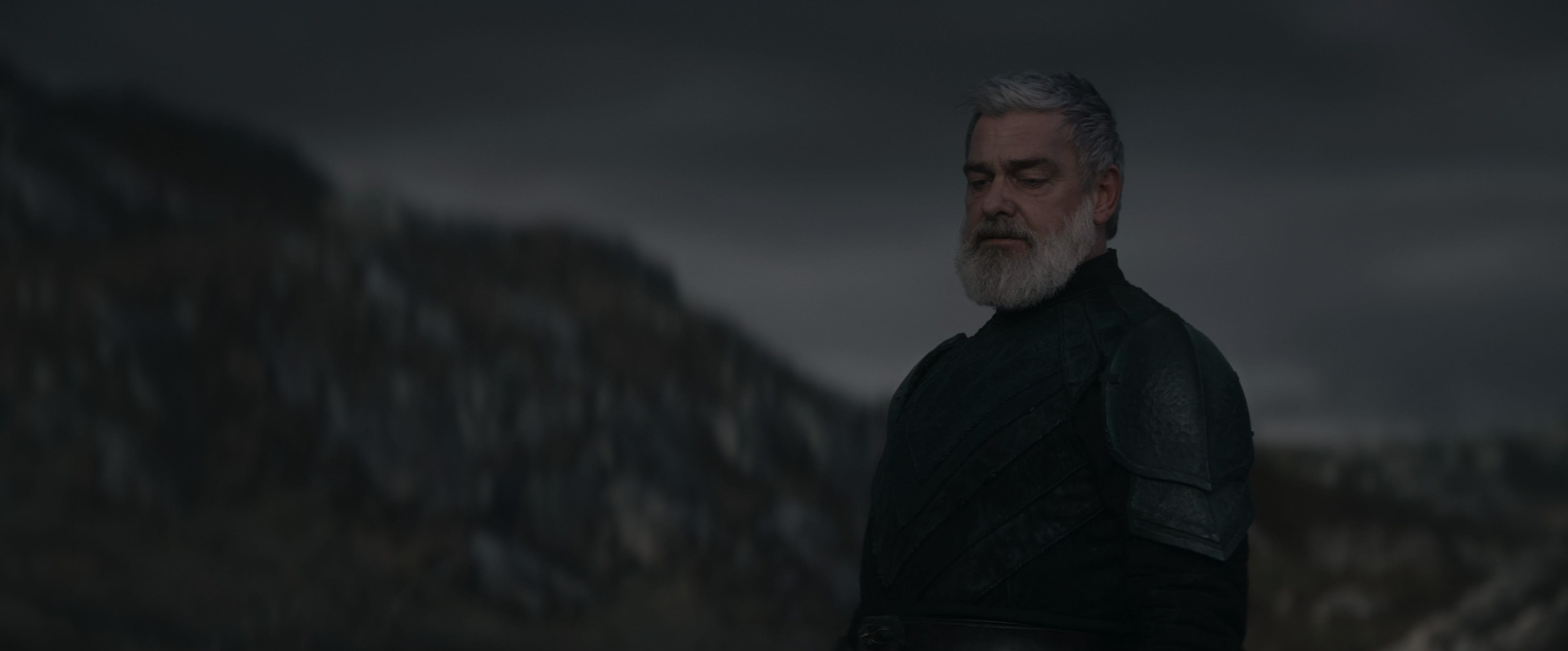
Early on, Galahad and the Grail mentions the relatively obscure Arthurian knights (and brothers) “Balyn”1 and “Balan,” and upon reading these names, my Star Wars-filled mind immediately jumped to the name of the Ahsoka character “Baylan” Skoll (played beautifully in season 1 by the late Ray Stevenson,2 with Rory McCann taking over the role in the forthcoming season 2). Given the persistent Arthurian motifs in Ahsoka – which already features Marrok, a character named after an Arthurian knight, as well as a witch named Morgan (overtly evoking the Arthurian witch Morgan Le Fay) and a character design ripped straight from John Boorman’s Excalibur – I have no doubt that the name of Baylan, a fallen Jedi Knight, is derived from the names of the disgraced Arthurian knights Balyn and Balan.
But why?
Based on season 1, I can make little hay out of the connection – but I do have some thoughts on what the name might suggest for the future direction of Ahsoka’s plot.
The Arthurian Balyn is almost certainly best known for the “dolorous stroke” that wounds the Fisher King, causing his land to wither and turn into a barren wasteland. This leads the Knights of the Round Table to undertake the quest for the Holy Grail, which will heal both the Fisher King and his land.
This mythological motif – a kingly figure whose health is linked to the flourishing of the land he rules – plays out through the character of the “forest god” from Hayao Miyazaki’s animated film Princess Mononoke, which is clearly beloved by Ahsoka creator Dave Filoni. Ahsoka herself is visually inspired by San, the heroine of Princess Mononoke, and Filoni’s work has paid overt homage to Mononoke’s forest god twice before: through the “ocean spirit” in Avatar: The Last Airbender’s first season finale (which he directed) and the Bendu in the third season of Star Wars Rebels.
The Fisher King motif, dovetailing with this motif from Princess Mononoke, would not only be familiar territory for Ahsoka to explore given its creator’s recurring interests – it would fit neatly into Star Wars’ overarching project of fusing Western and Eastern mythologies, and Ahsoka’s specific penchant for fusing the work of Hayao Miyazaki with English mythology and literature (not just Arthuriana, but Shakespeare – especially Macbeth,3 with its three witches – and the work of the Inklings4).
Ahsoka has thus far been quite cagey about the nature of Baylan Skoll’s quest, but it seems he is trying to find the Mortis Gods – three archetypal figures (Father, Son, and Daughter) from The Clone Wars who represent different aspects of the Force. This quest is taking place on the planet Peridea – a wasteland that evokes the barren and wasted domain of the Fisher King.
Based on the Fisher King narrative, I would not be surprised if Baylan seeks to harm the Mortis Gods (or unwittingly does so), which in turn does harm to their “land” – whether that be Peridea, the galaxy as a whole, or (somehow) the Force itself – and which has to be reversed by the Jedi Knights Ahsoka and Sabine Wren, by way of a quest to restore the Mortis Gods as the Knights of the Round Table must go on a quest to restore the Fisher King. If that is the direction Ahsoka goes, you heard it here first!
TINFOIL HAT BONUS ROUND: Judging by the trailer (above), Anakin Skywalker will play a prominent role in Ahsoka season 2. Might Anakin himself be Ahsoka’s Fisher King?
The Fisher King is a kind of Christ figure. Balyn wounds him with the Lance of Longinus or Spear of Destiny, which pierced Jesus Christ’s side during His crucifixion, and the life of the Fisher King’s land is tied to the life of the Fisher King, much as Christ is the “life of the world.” In Star Wars, Anakin is already a kind of Christ figure – a messianic Chosen One, the offspring of a virgin birth, who is prophesied to bring about cosmic restoration.
In The Clone Wars, the Father of the Mortis Gods wants Anakin to take his place as the one holding the Force in balance. If Anakin has, in fact, become the Father of the Mortis Gods, and is holding the Force in balance as the Chosen One – and if Baylan’s quest could somehow do harm to Anakin – would that, in keeping with the Fisher King motif, somehow do harm to his “land” (the galaxy, the Force)?
“Balyn” can also be spelled “Balin,” which would not necessarily have given rise to this line of thought; so we can thank Guite for rendering it “Balyn”!
Just this morning, Christopher Wilbur’s Substack “Our Favorite Star Wars Scenes” ran a post of mine appreciating one of Stevenson’s finest moments in Ahsoka.
Macbeth also has a variation on the theme of the king whose death is reflected in the withering of his land, á la Arthuriana’s Fisher King and Princess Mononoke’s forest god: after Macbeth murders the rightful king Duncan, Scotland is afflicted by ominous, unnatural portents.
Ahsoka’s season finale is titled “The Jedi, the Witch, and the Warlord” – an unmistakable nod to the title of British author C.S. Lewis’ first Chronicles of Narnia book, The Lion, the Witch, and the Wardrobe. The series also contains several references to Lord of the Rings, including a Gandalf-style fall, resurrection, and transformation and a golden ring named the “Eye of Sion,” simultaneously evoking the One Ring and the Eye of Sauron.