
My Relationship with Christopher Nolan

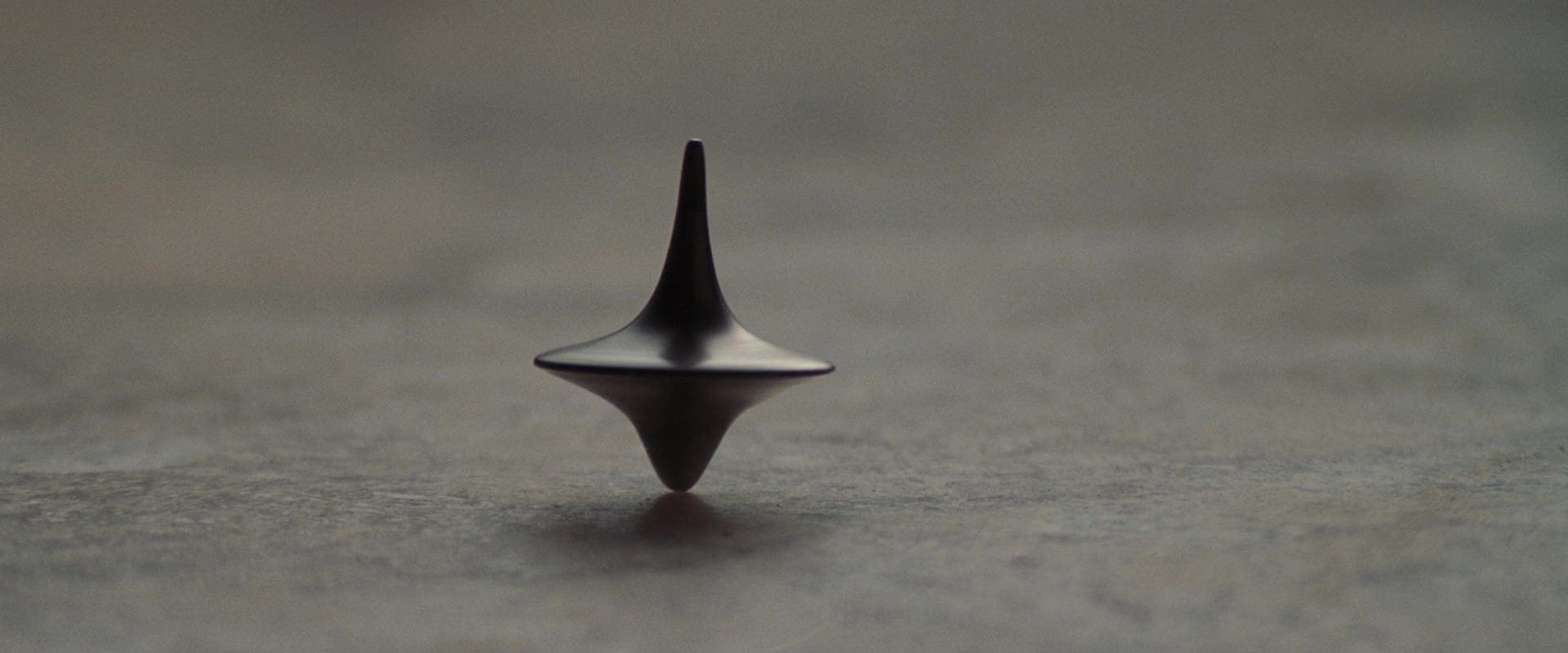
I almost met Christopher Nolan once. I was at Los Angeles’ Academy Museum of Motion Pictures, where Nolan was going to give a talk introducing a screening of George Stevens’ great western Shane.1 More precisely, I was making my way through a dense crowd to the bar when I realized that Christopher Nolan himself was striding more or less directly towards me, wearing an expression of glowering British intensity as he pushed through the masses, followed by a woman who I did not recognize in the moment but have retroactively concluded must have been his wife and producer, Emma Thomas. Chris passed within one or two feet of me (I could have reached out and touched the hem of his garment) and that was that.
The funny thing is that the one time I was actually in close physical proximity to Christopher Nolan is a mere footnote in the relationship I have with him as an artist. I know far less of him from that brief non-interaction than from the years I have spent watching and thinking about his films.
Since the release of Inception in 2010, I have seen every new film Christopher Nolan has made in a theater – most of them more than once. That includes a pilgrimage to Las Vegas to see Tenet in a theater, mask and all, during 2020’s COVID-19 lockdowns (movie theaters weren’t open in California; the mask, in its own perverse way, made it a more immersive experience, given how much time the characters spend in breathing apparatuses).
I missed the Dark Knight craze in 2008 (I was too young to be allowed to see it), but managed to talk my parents into letting me partake in the pop cultural event that was Inception, and by the time The Dark Knight Rises came out in 2012, I had caught up on the PG-13 portion of Nolan’s filmography. Like many people of my generation, Nolan was a formative influence on my love of the art form. His movies – overtly cerebral and emotionally morose puzzle boxes that nonetheless retained mass appeal by taking the form of blockbuster tentpoles – were a game-changer for my developing love of film. They altered my perception of what movies could do and be. In particular, they built a bridge between my burgeoning cinephilia and the concurrent explosion of my interest in intellectual pursuits. (I still remember a beloved classics teacher in high school using an example from Inception as shorthand to illustrate a philosophical concept.)
Over the years, I have grown and the criteria of my tastes have shifted somewhat. For a few years surrounding the release of Interstellar in 2014, Nolan’s star fell from grace in my mind, in part because that film was widely lambasted in my circles for being an overwrought rip-off of 2001: A Space Odyssey, and in part as a reaction against the exaggerated fervor of his devotees. (One example: a film school classmate enthusiastically telling me, without a hint of irony, that he had outgrown Steven Spielberg and moved on to Christopher Nolan. Come on, bro.) But 2017’s Dunkirk brought me back into the fold, and I like to think that at this point, I have a clear-eyed love for Nolan – a love which acknowledges his limitations without feeling the compulsion to apologize for them, while gratefully embracing his accomplishments and all they have meant to me. (I have, also, at this point, seen the light on Interstellar; it’s one of his best films.)
The comparison between Spielberg and Nolan is more illuminating than I think my esteemed colleague was aware of. It shines a light on some notable ways in which Nolan’s films are often lacking: their visual storytelling tends to be more prosaic and functional than beautiful or expressive (in terms of camerawork, they are never as effortlessly virtuosic as even Spielberg’s minor works), and their characters are not as closely observed and believably human. But Nolan is the best candidate for the title of his generation’s Spielberg: he is one of those rare filmmakers who has become a household name even for non-film buffs, and he seems to be on a similar career trajectory, straddling the line between genre entertainment (both original ideas like Close Encounters of the Third Kind and Inception and adaptations like Jurassic Park and Batman Begins) and Serious Films (like Schindler’s List and Oppenheimer). Like Spielberg, Nolan makes movies that have wide-ranging popular appeal as well as an introspective, personal charge. Both artists have a knack for smuggling self-reflection into their art. Through Nolan’s films, I see a man who loves deeply but is profoundly terrified of loss, a man driven by that terror to try and control reality with his prodigious mind, and a man growing in fits and starts towards the wisdom of surrender. To say I find him relatable would, perhaps, be selling it short.
I would not name Nolan one of my top five or even ten directors of all time (if we narrow the field to directors working today, it’s a different question), but the fact of the matter is that there is no other filmmaker with whom I have the particular kind of relationship I have with him. There are filmmakers whose work might touch my heart more deeply, or whose movies I might find more accomplished, but I only discovered the work of masters like Terrence Malick, David Cronenberg, and Paul Thomas Anderson after many of the brightest years of their careers had already elapsed. Perhaps it’s a fitting tribute, given Nolan’s foremost thematic fixation, that he is the only filmmaker whose artistic evolution I have been able to follow in real time through so many seasons of my own life. For that reason, he holds a unique and special place in my heart.
Nolan does not make the kind of films I watch once, form a definitive opinion on, and then move on from; my relationships with them are fluid and continually evolving. Whenever a new Nolan film comes out, it is an event for me, irrespective of how successful it is. I am invested in him as an artist such that even if his films have shortcomings, those shortcomings themselves are interesting to me because of how they dialogue with the strengths and weaknesses of his past works and reveal what new directions he is pushing himself in now.
At the time of this writing, I have seen The Odyssey once. I loved a lot about it, and I have some reservations about it, but I hold those judgments loosely. What I can say with confidence is that it is unmistakably A Christopher Nolan Film, and I’ll be thinking about it – and the man who made it – for years to come.
A highlight from this talk was Nolan’s description of a Warner Bros. executive’s response to the ending of the script for The Dark Knight: “But it’s just Shane!” Nolan, in his words, replied: “Yeah, but no one will know that except for movie critics and films buffs, and they love that shit.”